The mistyped ORCID: the most common silent error in a journal’s metadata
Harvesting metadata from journals across the region, we found ORCIDs swapped between co-authors, the journal’s own ORCID attached to an author, and the same code repeated across sixteen bylines. How to prevent it.
What we see when harvesting metadata
An ORCID is a strong claim: it says this byline is this person, the same one who signed twenty other works. When it is wrong, the error is not cosmetic: output is credited to someone who did not produce it.
In metadata harvested from journals across the region, four patterns show up, all of them products of manual entry:
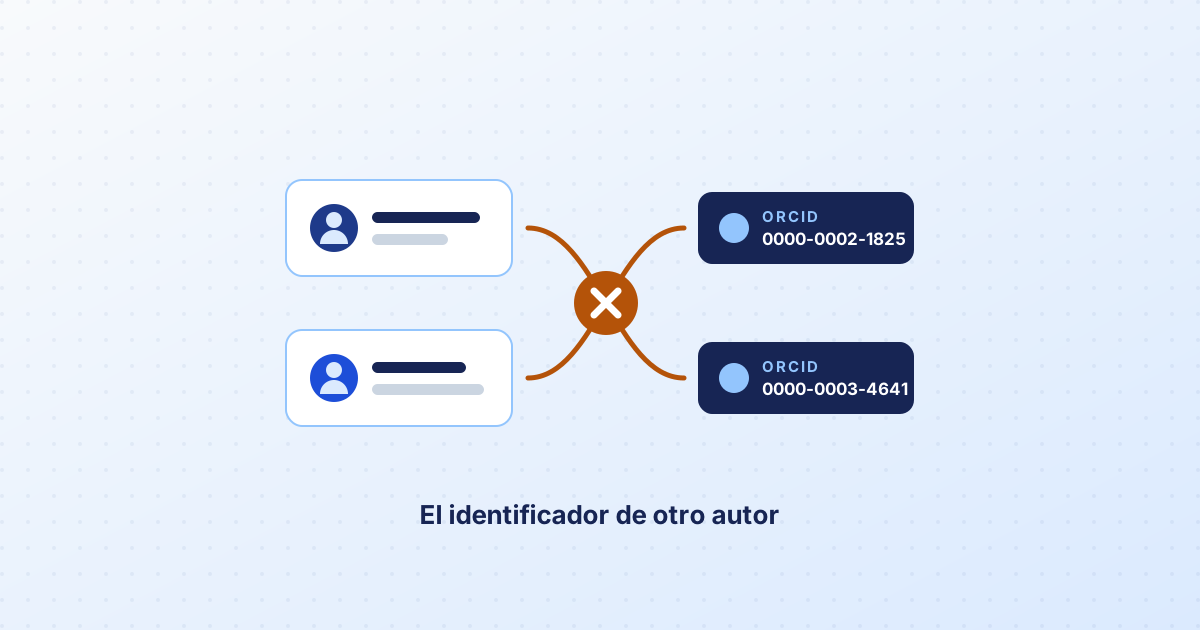
- ORCIDs swapped between co-authors. The first author carries the second author’s code and vice versa.
- The institutional or editor’s ORCID attached to an author. It usually happens when the editorial team fills in data the author did not provide.
- The same code repeated across every byline of an article. Copy and paste down the list.
- Codes with one digit changed which, given the shape of the identifier, often belong to another real person.
The proportion is small — under one per cent of bylines in our measurement — but across tens of thousands of records it means hundreds of wrong attributions, and each one harms two people: the one who loses their work and the one who receives someone else’s.
Why it happens
Because the ORCID is typed by hand. In most editorial workflows someone copies the code from an email, a form or a PDF and pastes it into the field. There is no validation: the system accepts any string with the right shape.
How to stop it at the source
- Enable ORCID authentication in your editorial system. OJS has a plugin that makes the author sign in to ORCID and returns a verified code. The difference from a free-text field is absolute: the author confirms their own identity, not the editorial team.
- Do not fill in ORCIDs on the author’s behalf. If it is missing, ask for it. An empty field is far better than a wrong one.
- Ask for the ORCID of every co-author, not just the corresponding one. It is the most frequently missing data point in the region’s metadata.
- Check against the public registry. The ORCID registry is queryable and free: it lets you confirm that the name attached to a code resembles the byline. An automated check before an issue goes out catches the swap between co-authors.
- Review already published issues. Correcting metadata in back issues is possible and worth doing: aggregators re-harvest.
The detail almost nobody configures
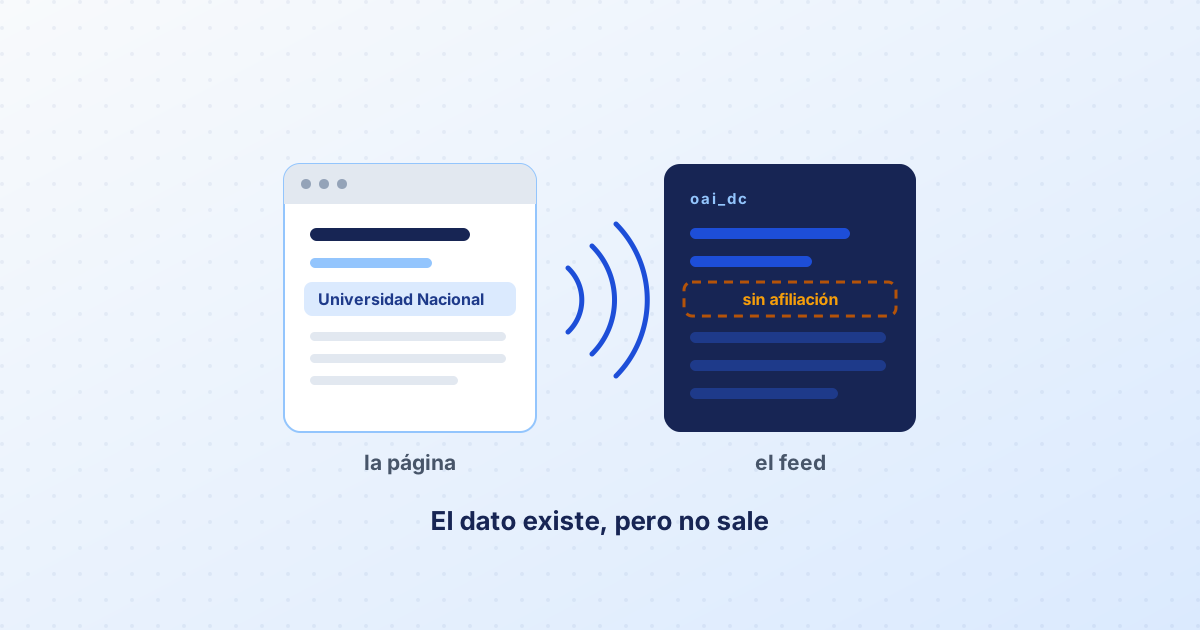
An ORCID stored in the system does not mean it reaches the world. Check that your metadata export — the OAI-PMH feed, the DOI deposit, the files you hand to aggregators — actually includes each author’s identifier. It is common to find journals with ORCIDs loaded that never export them: the data exists and helps nobody.
The same goes for affiliations
A well-entered ORCID with an empty affiliation solves half the problem. Always ask for institution, city and country, using the official name, untranslated.
Summary for the editorial team
Authenticated, not typed. Every co-author, not just the corresponding one. Verified against the registry before publication. And exported in the metadata, not just stored in the database.