Creative Commons licences: what you give away and what you keep
CC BY, CC BY-NC, CC BY-SA, CC0. Four labels that decide who can reuse your work, for what, and under what conditions. Worth understanding before you sign.
A licence is not the same as a transfer of rights
Two different things are at stake when you publish:
- Ownership of copyright: who legally owns the text. It can stay with you or be transferred to the publisher.
- The usage licence: what the rest of the world may do with the article.
They are independent. You can keep ownership and publish under a very open licence, or transfer it and still have the work published in open access. Read the publishing agreement with that distinction in mind.
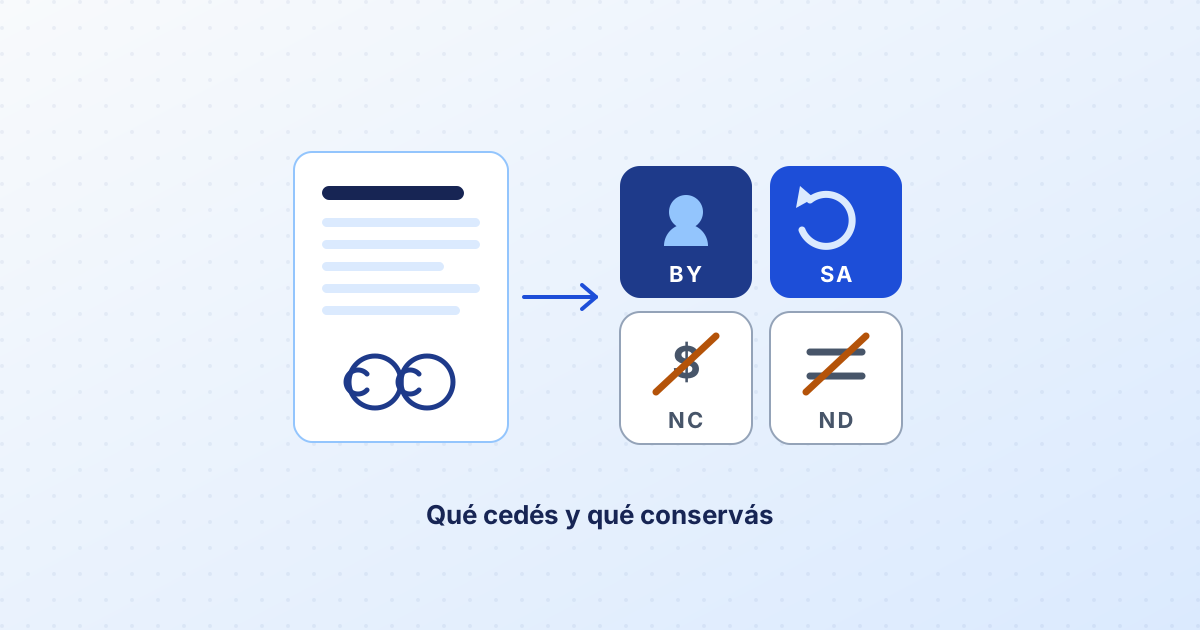
The four conditions and how they combine
- BY (attribution): you must be credited. Present in every current Creative Commons licence.
- NC (non-commercial): commercial uses are forbidden.
- ND (no derivatives): the work can be shared, not modified or translated.
- SA (share alike): derivatives must carry the same licence.
What each one means in practice
CC BY. Anyone can copy, translate, adapt and reuse your work, including commercially, as long as they cite you. It is the licence recommended by most open access definitions and by several funders. It allows, for example, your article to be translated into Guaraní or included in a textbook without anyone asking your permission.
CC BY-SA. Same as above, but derivatives inherit the licence. It is the free software logic applied to text. Wikipedia uses it, which makes it practical if you want your content to be able to flow there.
CC BY-NC. It sounds prudent but is the most problematic in practice: "commercial" is not precisely defined. Is a private university building a paid course making commercial use? Is an NGO selling its publications at cost? That ambiguity means many people, when in doubt, simply do not reuse. If your goal is circulation, NC often achieves the opposite.
CC BY-ND. It blocks translations and adaptations. In a region where translation is key to the circulation of knowledge, that is an expensive restriction.
CC0. Not exactly a licence but a waiver: you release the work into the public domain. For data and databases it is an excellent option; for articles it is unusual.
How to decide
Ask yourself what you want to happen to your work ten years from now:
- Do you want it to be translatable without asking permission? Avoid ND.
- Does it bother you that a company might include it in a product while citing you? Only then consider NC, knowing the cost.
- Do you want derivatives to stay open? Choose SA.
- Are you publishing data? Look at CC0 or CC BY.
- Does your funder require something? Their mandate wins: several agencies require CC BY.
Before you sign
- Search the publishing agreement for the word "licence" and the word "rights". They are not the same clause.
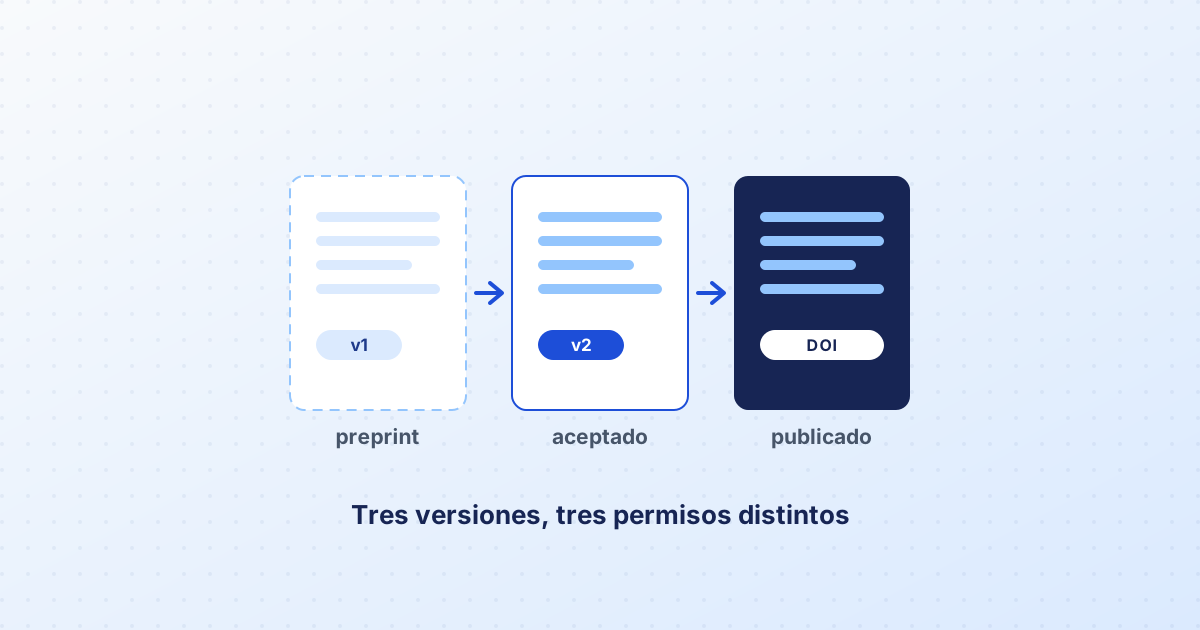
- Check whether you keep the right to deposit the article in your institutional repository, and which version.
- Confirm that the licence the journal advertises on its site is the one in the agreement. They do not always match.
- If something does not add up, ask before signing. Afterwards there is no room.