ISSN, DOI and preservation: making sure your journal still exists in twenty years
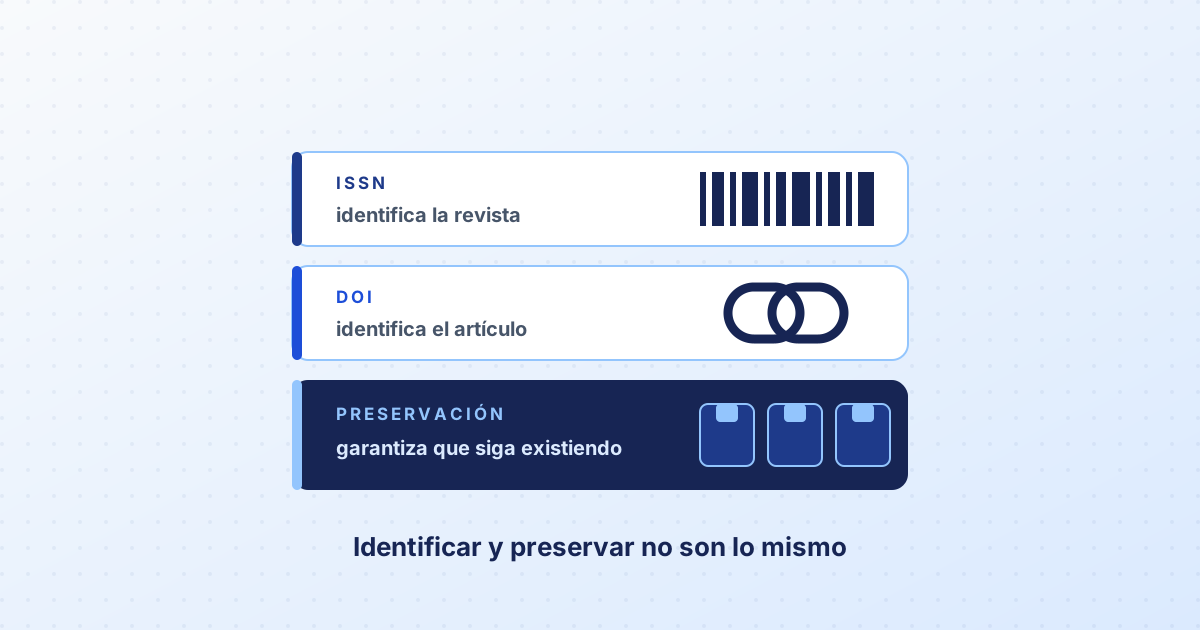
Identifying and preserving are two different problems with different solutions. A journal that solves only the first has links that work today and content that can vanish tomorrow.
Three layers that get confused all the time
- ISSN: identifies the journal as a serial publication.
- DOI: identifies each article and guarantees the link still leads there even if the site changes.
- Preservation: guarantees the content still exists even if the journal does not.
They are independent. You can have all three, two or none, and most journals in the region have one or two.
ISSN: one per medium
The ISSN is assigned by the national centre of the country where the journal is edited, it is free in most countries, and it is requested through the publishing institution. Two things that get overlooked:
- If you publish in print and online, you need two different ISSNs. Using the print one for the digital edition creates duplicate records in every database.
- There is also the ISSN-L, which links the different versions of a single title. That is the one to state when a form asks for "the" ISSN of the journal.
And one rule: if the journal title changes, the ISSN changes. It is not optional.
DOI: the link that does not break
A DOI is a persistent identifier that resolves to the article’s current location. Its value lies not in the code but in the commitment the journal takes on: keeping that resolution up to date forever.
Assigning DOIs requires membership of a registration agency — Crossref and DataCite are the usual ones in academia — which carries an annual cost, with reduced fees for institutions in many countries. Several regional networks and university consortia offer shared memberships that lower the barrier considerably: check with your library before ruling it out on price.
Three obligations that come with DOIs and are worth knowing before you start:
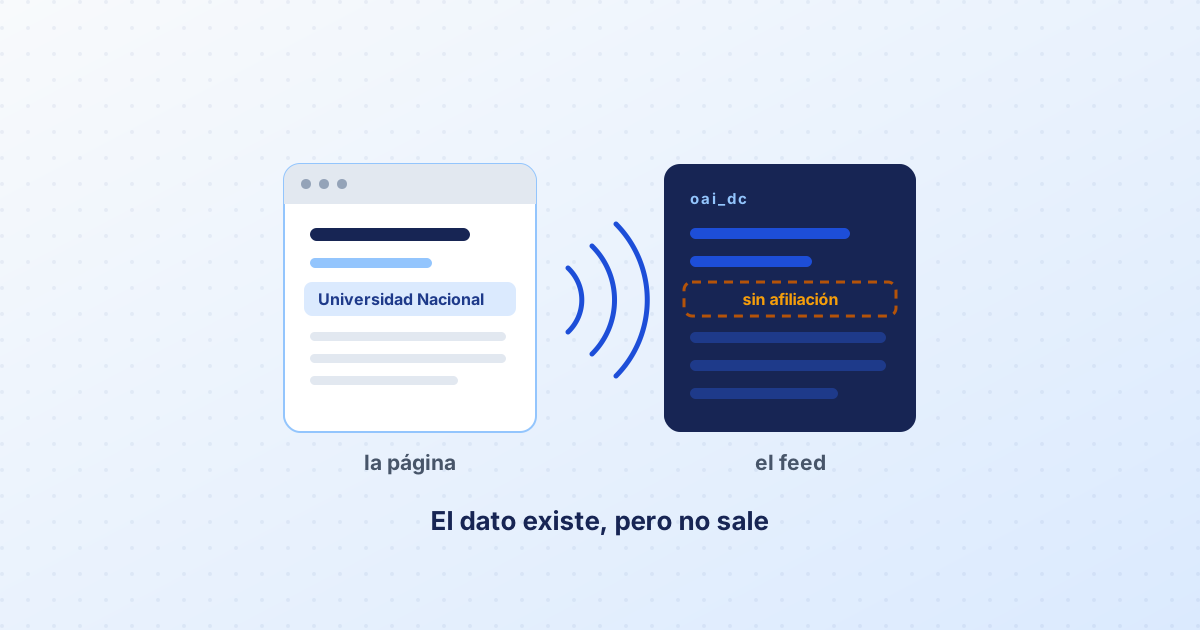
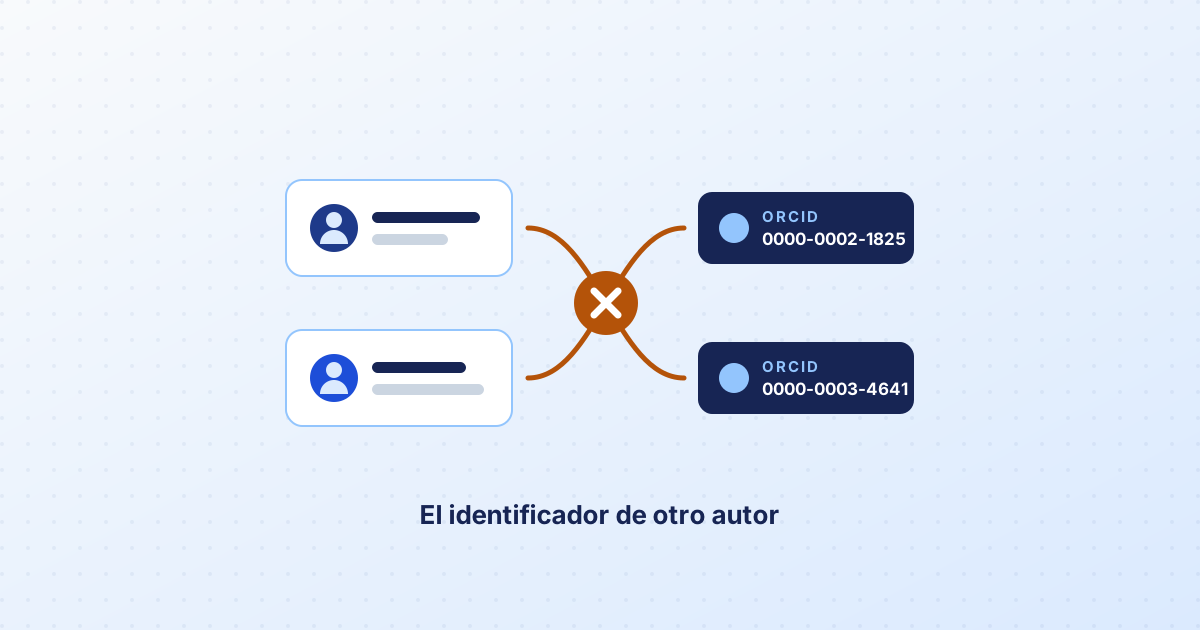
- Deposit complete metadata, not just the link. Authors with ORCID, affiliations, licence, abstract and, where possible, the cited references. Depositing references is what makes citations between journals in the region countable.
- Update the resolution if you migrate the site. A DOI pointing at a dead address is worse than no DOI: it promises permanence and fails to deliver.
- Register corrections and retractions too, linked to the original article.
Preservation: the uncomfortable question
If your server is lost tomorrow and the backup fails, where is your journal? Backups controlled by the editorial team are not preservation: they depend on the same institution, the same people and the same budget that can disappear.
Real preservation means copies of the content are distributed across institutions independent of yours, with a formal commitment to maintain them. There are networks built for this in the scholarly journal world, several of them free or very low cost for small publications, and some integrated directly into editorial management systems: you switch them on in the settings.
A good starting point: ask your institution’s library and your regional journal network which preservation option they use. In many cases one already exists and it is a matter of joining.
Checklist
- Do we have an ISSN for each medium, and do we state the ISSN-L?
- Do we assign DOIs to every article, including back issues?
- Do we deposit complete metadata, with ORCIDs and references?
- Do we take part in a preservation network, and do we say so on the site?
- If the journal closed this year, would the content remain accessible?
The fifth question is the only one that truly matters. The other four are the way to be able to answer it with a yes.