The policies your journal must publish (and almost nobody can find)
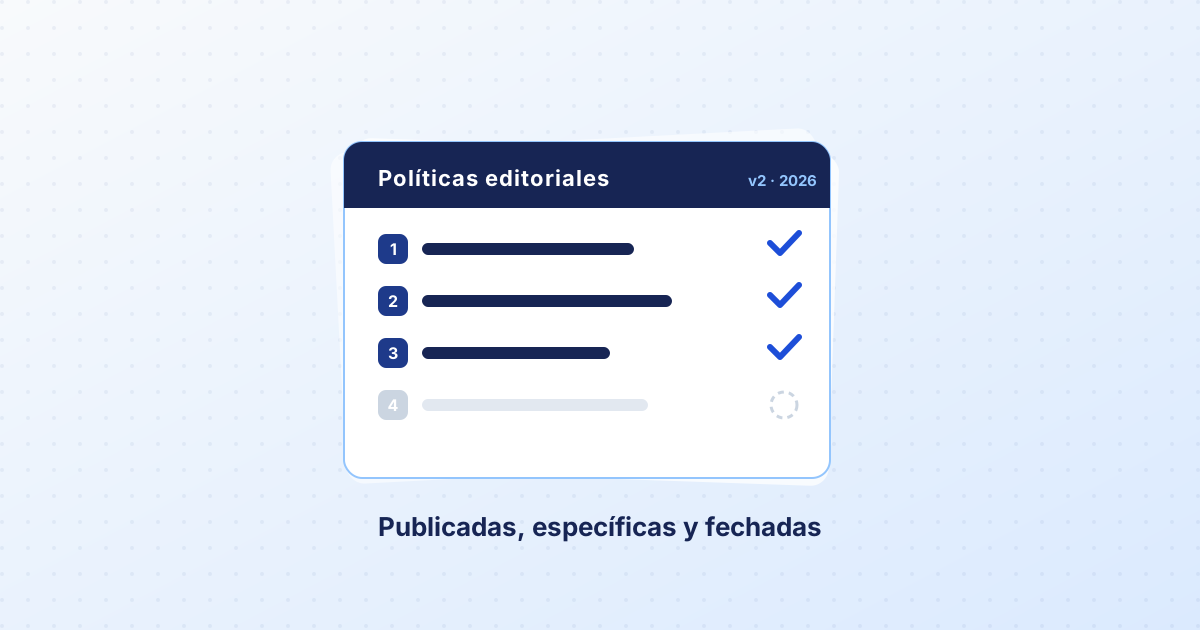
Having editorial policies is not enough: they have to be published, specific and findable in two clicks. Here is the minimum list and what each one must say.
A policy that is not published does not exist
Many journals have solid processes that only the editorial team knows about. For an author deciding where to submit, for a library assessing what to subscribe to, and for any directory gathering information, the only thing that counts is what is written and accessible on the site.
The good news: writing these policies is an afternoon’s work, and you do it once.
1. Focus and scope
What the journal publishes and what it does not. Disciplines, accepted article types — original research, reviews, notes, book reviews — and which community it addresses. A specific scope saves avoidable rejections and gives the publication an identity.
2. Peer review process
This is the most important policy and usually the worst written. It must state:
- Which model applies: single-blind, double-blind or open.
- How many reviewers take part and what happens with conflicting reports.
- Who makes the final decision.
- Estimated timelines per stage, with real rather than aspirational numbers.
- Whether there is an editorial pre-screening and on what grounds a paper is desk-rejected.
3. Publication ethics and misconduct
State which guidelines you follow — COPE is the usual reference — and explain the concrete procedure for allegations of plagiarism, duplicate publication, improper authorship or manipulated data. "We adhere to good practice" with no procedure says nothing. Include your policy on the use of artificial intelligence tools in writing and in review: authors are asking about it today.
4. Authorship and contributions
What criteria you use to decide who signs — the ICMJE criteria are the most cited standard — and how authorship changes after submission are handled. If you require a contribution statement per author, explain the format.
5. Conflicts of interest
What an author must declare, what a reviewer must declare, and what the journal does when an editor has a conflict with a manuscript. Publish the form you use.
6. Access, licences and rights
If the content is open access, say so with the exact licence and a link to its legal text. Clarify who keeps copyright, which versions the author may deposit in a repository, and whether there is an embargo.
7. Publication charges
If you charge, publish the amount, when it is charged and what waivers exist. If you charge nothing, write it explicitly: "this journal charges no submission or publication fees". It is one of the sentences that reassures authors most.
8. Corrections, retractions and expressions of concern
What happens when a published article contains an error. The golden rule: the original article is never deleted or silently replaced. A correction or retraction notice is published, linked in both directions, and the historical record stays intact.
9. Digital preservation
What happens to the content if the journal stops publishing. Name the preservation network you take part in. If you do not yet take part in any, that is probably the most urgent improvement your journal can make.
10. Publication frequency and contact details
Real publication frequency, whether you accept continuous publication, and an institutional contact with a name, a role and a postal address. A free mailbox as the only contact breeds distrust even when the journal is impeccable.
Two implementation details
- Date each policy and keep a version history. It lets anyone know which rules applied when a given article was published.
- Translate them into every language you publish in. A policy only in Spanish, in a journal that receives work in Portuguese and English, leaves out half of its authors.